
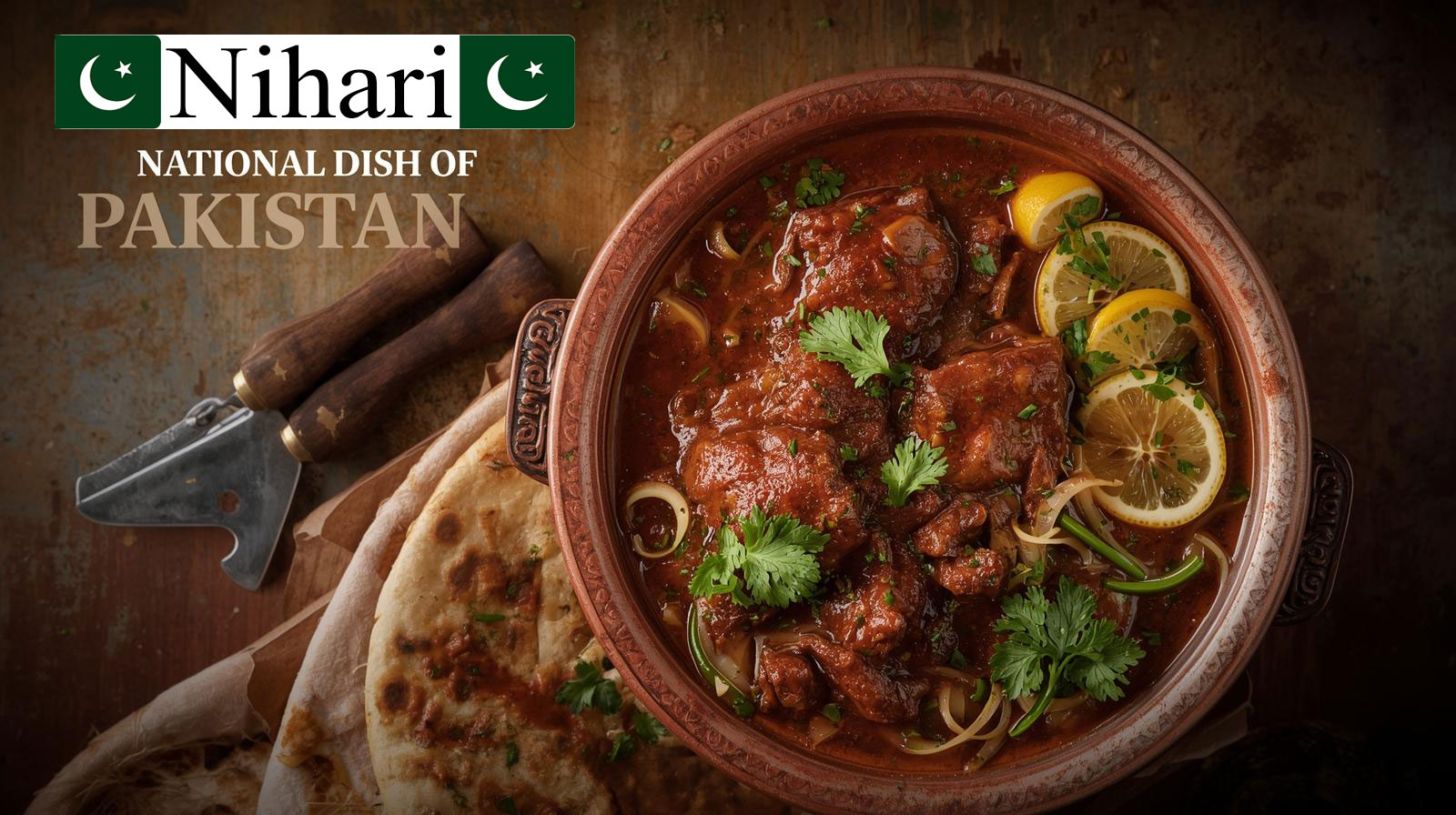
Nihari – The National Dish of Pakistan: Nihari is Pakistan’s national dish, cherished for its rich flavor, aromatic spices, and tender meat. It is a slow-cooked stew, traditionally made with beef, mutton, or sometimes lamb, simmered for several hours to achieve a deep, savory taste. The name “Nihari” comes from the Arabic word Nahar, meaning “morning,” as it was originally eaten as a hearty breakfast by workers and nobles alike.
Nihari, originating from the Arabic word “nahaar” meaning “morning,” signifies its historical purpose as a delightful morning meal, offering a flavorful start to your day.
National Dish of Pakistan [Nihari] Main Ingredient
Pakistan’s national dish, Nihari, is a slow-cooked, spiced lamb or mutton stew. Originating in 18th-century Delhi, it was traditionally eaten for breakfast and is now enjoyed as a rich, flavorful meal with naan, both at home and as street food.
Main Ingredient Use in Nihari
Ingredients And Preparation:
The key ingredients of Nihari include:
- Meat (beef or mutton)
- Bone marrow for richness
- Ghee or cooking oil
- Onions, garlic, and ginger
- Spices such as cloves, cinnamon, cardamom, black pepper, and chili powder
- Wheat flour for thickening
The meat is slowly cooked on low heat, often overnight, which allows the flavors to blend perfectly. The thick, spicy gravy and tender meat are what make Nihari so irresistible.
Serving Tradition:
Nihari is traditionally served hot with naan, paratha, or sheermal, and garnished with:
- Fresh ginger slices
- Green chilies
- Lemon wedges
- Fresh coriander leaves
It is enjoyed at breakfast, lunch, or dinner, especially on special occasions, festivals, and family gatherings.
National Dish Of Pakistan And Its Main Ingredient
Cultural Significance:
Originating in the Mughal era, Nihari has become a symbol of Pakistan’s culinary heritage. It represents not only rich flavors but also the tradition of slow-cooked meals shared among family and friends. Over the years, Nihari has spread across the country, with each region adding its own twist to the recipe.
Why Nihari is Special:
- Tender and Flavorful Meat: Slow-cooking makes the meat melt in your mouth.
- Rich and Aromatic Gravy: Perfect blend of traditional spices.
- Cultural Heritage: A dish that reflects Pakistan’s history and tradition.
- Versatile Meal: Enjoyed for breakfast, lunch, dinner, or special events.
What Is The National Dish Of Pakistan
Nihari is more than just a meal; it’s a taste of Pakistani culture and tradition. Its slow-cooked richness, spicy aroma, and comforting flavors make it a beloved dish nationwide, earning its title as Pakistan’s national dish. Anyone visiting Pakistan must try Nihari to experience its true culinary magic.
Nihari – Pakistan’s Traditional Meat Dish
Introduction
Nihari is a rich and aromatic meat stew, celebrated for its hearty flavors. Originally a winter delicacy, it was served as breakfast to the Muslim Nawabs of Lucknow and Delhi, giving it a royal origin.
Historical Background
The word “Nihari” comes from the Arabic “nahaar”, meaning morning, because it was traditionally eaten as the first meal of the day after Fajr prayer. Over time, the dish moved from royal kitchens to laborers’ meals, providing sustenance for long working hours.
Ingredients and Spices
Nihari is made with beef, mutton, lamb, or chicken, and often includes bone marrow (nalli) or brain (maghaz). Its rich flavor comes from up to 50 spices, including cloves and long pepper (Peepli), which add depth and aroma.
Cooking Process
The dish is slow-cooked for 6–8 hours in a large pot called shab degh, sometimes sealed with lai (flour glue) to lock in the aromas. The slow cooking makes the meat tender and the gravy thick and flavorful.
Serving and Garnishing
Nihari is served with naan or paratha and garnished with:
- Lemon wedges
- Chopped cilantro and mint
- Julienned ginger
- Green chilies
These garnishes enhance the richness and add freshness to each bite.
Cultural Significance
Nihari is more than just food; it is a symbol of tradition and hospitality. Enjoyed at family gatherings, festivals, and special occasions, it represents Pakistani culinary heritage and continues to delight people across generations.
Conclusion
With its slow-cooked tenderness, aromatic spices, and comforting flavors, Nihari remains a timeless national dish of Pakistan, loved by all

